After almost
every 'rude Chinese tourist' story, unfortunately, made SCMP.com's
top-10 list, I decided to give the question some serious thought
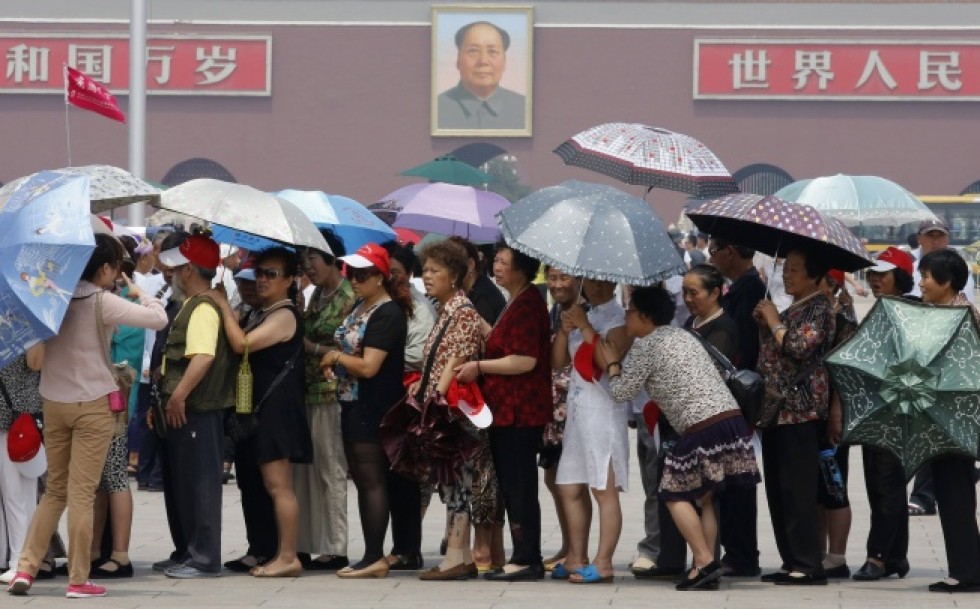
Tourists holding umbrellas visit Tiananmen Square in Beijing. Photo: Reuters
They are seen as pushy, loud, impolite, unruly, and they are everywhere.
And although destination countries welcome the tourism dollars the Chinese spend, they loathe the chaos and hassle some mainland tourists bring upon their cities and other tourists.
“Why can’t they just behave?” people wonder, some aloud.
I have been asking myself the same question in the past months after reporting on the uncivilised, sometimes galling behaviour of some compatriots.
It seems that every time a “rude Chinese tourist" story is published on SCMP.com, it goes straight into the site's top 10 most read articles - one such article even managed to crawl back to the top months after it was posted. So I decided to give the question some serious thought.
I read up on the topic, talked to tourism experts and travel agents and chatted with some of these tourists who are now at the centre of public anger.
It soon dawned on me that the real question to ask is: “Why are the Chinese rude?”
Yong Chen, tourism researcher and post-doctoral fellow at Hong Kong Polytechnic University, said most “bad” tourists don’t intend to be “bad” or “tourists”, they are just being themselves - they are being Chinese.
Education makes a difference
Not every Chinese tourist is a rude one, and educated people are usually better behaved than those who have had a lower standard of education, said Chen.
This could be why middle-aged or older tourists who have been deprived of or received little education during China's politically tumultuous times tend to act more unruly. Many of them do not speak English, and some are not fluent Putonghua speakers. Their knowledge of the destination country and its culture is often at best outdated or non-existent.
This might explain the behaviour of a "rogue” mainland couple who recently visited Hong Kong with a group. They called the police and demanded HK$3,000 yuan in compensation after being made to wait two hours for their coach. The travel agency later said the coach had broken down and accused them of “blackmailing”.
Disregard for customs and rules
Jenny Wang, a Beijing-based Maldives travel agent, said uneducated tourists usually turn a blind eye to local rules and customs.
A Chinese man who was recently vacationing at a Maldives resort flipped out after discovering that the restaurant where he wanted to eat was fully booked, Wang said. He yelled threats and slurs at Chinese staff until one member was in tears.
“You cannot reason with these kinds of people,” Wang said. “They think they can do anything with their money.”
But one thing many Chinese vacationers don’t want to do with their money is tip - a custom in some places which many have ignored, Wang said.
Though most travel agents in China would educate their clients about tipping in a foreign country ahead of their trip, most people ended up tipping very little or none.
Some are not used to the idea of tipping, and they fail to understand that staff working at the Maldives resorts, who usually earn a meagre salary, rely heavily on tips, Wang said.
This has created increasing tensions between the Chinese and their hosts. Staff would naturally prefer serving guests from countries with a tipping culture. Other staff have gone after Chinese clients and asked openly for tips, a rare thing for them to do in the past.
Lawless for a reason
Students at Ewha University in Seoul, known for its beautiful campus, have recently complained about an influx of Chinese tourists, said the school.
Apparently taking photos on campus was not enough. Some camera-toting Chinese would also stride into libraries and take photos without the permission of students, according to media reports.
“As much as we want to keep the campus open to the local community,” said a university representative, “we’d like to prioritise our students’ right to study in a quiet and safe environment.”

Ewha resolved the crisis by putting up multi-language signs advising tourists to stay clear of study areas.
It seems that thousands of years after Confucius admonished his students not to “impose on others what you yourself don’t desire", the Chinese now act in quite the opposite way.
Such people, both overseas and at home, selfishly skirted rules for a reason, said Chen.
Living in China, where the rule-of-law doesn’t exist, means everyone has to look out for their own interest. It also means people have little or no respect for laws.
This is bound to happen when ordinary folk are forced to watch their laws being violated every day by their leaders, Chen said, citing the Chinese idiom, shang xing xia xiao, meaning “people in lower class follow what their leaders in the upper class do”.
How long do we have to put up with bad tourists?
China and its people are paying a price for the bad behaviour of their tourists.
A poll by the Public Opinion Programme of the University of Hong Kong recently found that the number of Hongkongers holding negative feelings towards Beijing and mainland Chinese is up by about 40 per cent since November.
Following that survey, SCMP.com conducted another online poll on Wednesday, headlined “What makes some Hongkongers dislike mainland China and its people?”
As of noon, more than 50 per cent readers blamed the negative feelings on “ill-behaved tourists”.
“The Chinese government and travel agencies should take the initiative to educate our tourists,” Chen said, urging co-operation from both authorities and private sectors.
While many argue that historically American and Japanese tourists were also criticised for their bad behaviour when they became wealthy enough and traveled abroad for the first time, Chen said the Chinese should not use this as an excuse.
In fact, the Communist Party's Central Guidance Commission for Building Spiritual Civilisation and the China National Tourism Administration have recently issued a 128-character-long rhyme to remind tourists of behaving in a “civilised manner” on the road. The topic has also been a big hit on China's social media, where bloggers discuss and criticise the uncivlised behaviour of their compatriots.
But many are not optimistic that the situation will change any time soon.
“Chinese tourists have a long way to go before they will be respected by the world,” said Wang.
And although destination countries welcome the tourism dollars the Chinese spend, they loathe the chaos and hassle some mainland tourists bring upon their cities and other tourists.
“Why can’t they just behave?” people wonder, some aloud.
I have been asking myself the same question in the past months after reporting on the uncivilised, sometimes galling behaviour of some compatriots.
It seems that every time a “rude Chinese tourist" story is published on SCMP.com, it goes straight into the site's top 10 most read articles - one such article even managed to crawl back to the top months after it was posted. So I decided to give the question some serious thought.
I read up on the topic, talked to tourism experts and travel agents and chatted with some of these tourists who are now at the centre of public anger.
It soon dawned on me that the real question to ask is: “Why are the Chinese rude?”
Yong Chen, tourism researcher and post-doctoral fellow at Hong Kong Polytechnic University, said most “bad” tourists don’t intend to be “bad” or “tourists”, they are just being themselves - they are being Chinese.
Education makes a difference
Not every Chinese tourist is a rude one, and educated people are usually better behaved than those who have had a lower standard of education, said Chen.
This could be why middle-aged or older tourists who have been deprived of or received little education during China's politically tumultuous times tend to act more unruly. Many of them do not speak English, and some are not fluent Putonghua speakers. Their knowledge of the destination country and its culture is often at best outdated or non-existent.
This might explain the behaviour of a "rogue” mainland couple who recently visited Hong Kong with a group. They called the police and demanded HK$3,000 yuan in compensation after being made to wait two hours for their coach. The travel agency later said the coach had broken down and accused them of “blackmailing”.
Disregard for customs and rules
Jenny Wang, a Beijing-based Maldives travel agent, said uneducated tourists usually turn a blind eye to local rules and customs.
A Chinese man who was recently vacationing at a Maldives resort flipped out after discovering that the restaurant where he wanted to eat was fully booked, Wang said. He yelled threats and slurs at Chinese staff until one member was in tears.
“You cannot reason with these kinds of people,” Wang said. “They think they can do anything with their money.”
But one thing many Chinese vacationers don’t want to do with their money is tip - a custom in some places which many have ignored, Wang said.
Though most travel agents in China would educate their clients about tipping in a foreign country ahead of their trip, most people ended up tipping very little or none.
Some are not used to the idea of tipping, and they fail to understand that staff working at the Maldives resorts, who usually earn a meagre salary, rely heavily on tips, Wang said.
This has created increasing tensions between the Chinese and their hosts. Staff would naturally prefer serving guests from countries with a tipping culture. Other staff have gone after Chinese clients and asked openly for tips, a rare thing for them to do in the past.
Lawless for a reason
Students at Ewha University in Seoul, known for its beautiful campus, have recently complained about an influx of Chinese tourists, said the school.
Apparently taking photos on campus was not enough. Some camera-toting Chinese would also stride into libraries and take photos without the permission of students, according to media reports.
“As much as we want to keep the campus open to the local community,” said a university representative, “we’d like to prioritise our students’ right to study in a quiet and safe environment.”
Ewha resolved the crisis by putting up multi-language signs advising tourists to stay clear of study areas.
It seems that thousands of years after Confucius admonished his students not to “impose on others what you yourself don’t desire", the Chinese now act in quite the opposite way.
Such people, both overseas and at home, selfishly skirted rules for a reason, said Chen.
Living in China, where the rule-of-law doesn’t exist, means everyone has to look out for their own interest. It also means people have little or no respect for laws.
This is bound to happen when ordinary folk are forced to watch their laws being violated every day by their leaders, Chen said, citing the Chinese idiom, shang xing xia xiao, meaning “people in lower class follow what their leaders in the upper class do”.
How long do we have to put up with bad tourists?
China and its people are paying a price for the bad behaviour of their tourists.
A poll by the Public Opinion Programme of the University of Hong Kong recently found that the number of Hongkongers holding negative feelings towards Beijing and mainland Chinese is up by about 40 per cent since November.
Following that survey, SCMP.com conducted another online poll on Wednesday, headlined “What makes some Hongkongers dislike mainland China and its people?”
As of noon, more than 50 per cent readers blamed the negative feelings on “ill-behaved tourists”.
“The Chinese government and travel agencies should take the initiative to educate our tourists,” Chen said, urging co-operation from both authorities and private sectors.
While many argue that historically American and Japanese tourists were also criticised for their bad behaviour when they became wealthy enough and traveled abroad for the first time, Chen said the Chinese should not use this as an excuse.
In fact, the Communist Party's Central Guidance Commission for Building Spiritual Civilisation and the China National Tourism Administration have recently issued a 128-character-long rhyme to remind tourists of behaving in a “civilised manner” on the road. The topic has also been a big hit on China's social media, where bloggers discuss and criticise the uncivlised behaviour of their compatriots.
But many are not optimistic that the situation will change any time soon.
“Chinese tourists have a long way to go before they will be respected by the world,” said Wang.

沒有留言:
張貼留言